
What to Expect in a Criminal Court Jury Trial in San Bernardino County
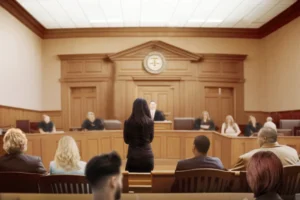
Facing criminal charges can be overwhelming, especially for someone who has never been through the court system before. Television often portrays trials as fast-moving events where attorneys make dramatic arguments and a jury returns a verdict by the end of the episode. In reality, criminal cases in California move through a series of structured stages, each with its own legal requirements and strategic decisions.
If you have been charged with a crime in San Bernardino County, understanding what happens from the first court appearance through a potential jury verdict can help reduce uncertainty and allow you to make informed decisions. It is also important to understand that a criminal defense attorney is not only important at the trial itself. Effective representation often begins long before a jury ever enters the courtroom.
Rancho Cucamonga attorney John D. Lueck represents individuals accused of misdemeanors and felonies throughout San Bernardino County and understands how local criminal courts operate. Every stage of a criminal case presents opportunities to protect your rights and strengthen your defense.
Step One: Arrest, Citation, or Filing of Criminal Charges
Criminal cases often begin with an arrest, although some begin through a criminal complaint filed by the prosecutor after an investigation. Depending on the allegations, a person may be:
- Arrested and taken into custody
- Issued a citation requiring a court appearance
- Contacted after charges are filed
During this early stage, law enforcement officers gather evidence, conduct interviews, and prepare reports that prosecutors will later review. This period can be critical because statements made to police may later be used against you. Many people mistakenly believe they can “clear things up” by answering questions without legal counsel. In reality, even innocent explanations can create problems later in the case. A defense attorney can intervene immediately by advising you regarding your rights and beginning an independent investigation before evidence disappears.
Step Two: Arraignment
The arraignment is typically the first formal court appearance after charges are filed. During the arraignment:
- The judge informs you of the charges
- Bail issues may be addressed
- You enter an initial plea
The plea options generally include guilty, not guilty, or no contest. In most cases, defendants plead not guilty at this stage to preserve legal options and allow time to investigate the case. For many people, this hearing can seem straightforward, but important decisions may be made regarding custody status and scheduling. A defense attorney may argue for reduced bail or release conditions and begin identifying weaknesses in the prosecution’s allegations.
Step Three: Pretrial Proceedings and Discovery
After the arraignment, the case moves into pretrial proceedings. The prosecution is generally required to provide evidence through a process known as discovery. Discovery may include, for example:
- Police reports
- Witness statements
- Surveillance footage
- Body camera recordings
- Laboratory results
- Photographs
- Expert reports
This stage frequently involves multiple court appearances. Defense attorneys use this time to carefully review evidence and identify legal or factual issues that can affect the outcome of the case. Examples include illegal searches or seizures, problems with witness identification, missing evidence, inconsistencies in police reports, or constitutional violations. Sometimes defense counsel will conduct independent investigations, interview witnesses, obtain records, or consult experts. Many cases are resolved during this stage because the defense uncovers weaknesses that create leverage in negotiations.
Step Four: Preliminary Hearing in Felony Cases
Felony cases generally involve an additional proceeding called a preliminary hearing. Unlike a trial, a preliminary hearing does not determine guilt or innocence. Instead, the judge decides whether prosecutors have presented enough evidence to establish probable cause that a crime occurred. Prosecutors often present:
- Testimony from police officers
- Witness statements
- Physical evidence
Step Five: Motions and Negotiations
Before trial, attorneys frequently file legal motions asking the court to make rulings on specific issues. Examples include motions to:
- Exclude unlawfully obtained evidence
- Suppress statements
- Dismiss certain charges
- Limit testimony
For example, if police conducted an illegal search of a vehicle or home, a defense attorney may seek suppression of evidence under California law. This stage is also where plea negotiations frequently occur. Not every plea agreement involves admitting guilt to the original charge. Depending on the facts, a defense lawyer may negotiate reduced charges, alternative sentencing options, diversion programs, or dismissal of allegations. Strong negotiation often depends on the attorney’s preparation and ability to demonstrate weaknesses in the prosecution’s evidence.
Step Six: Jury Selection
If no resolution is reached, the case proceeds to trial. The first stage of trial is jury selection, commonly called voir dire. Potential jurors are questioned regarding matters such as:
- Biases or preconceived opinions
- Prior experiences with law enforcement
- Personal experiences related to the allegations
- Ability to remain impartial
A defense attorney plays a major role during jury selection. Choosing the right jury can significantly affect trial outcomes. Experienced attorneys evaluate body language, responses, and attitudes to identify jurors who may be favorable or unfavorable to the defense.
Step Five: Motions and Negotiations
Before trial, attorneys frequently file legal motions asking the court to make rulings on specific issues. Examples include motions to:
- Exclude unlawfully obtained evidence
- Suppress statements
- Dismiss certain charges
For example, if police conducted an illegal search of a vehicle or home, a defense attorney may seek suppression of evidence under California law. This stage is also where plea negotiations frequently occur. Not every plea agreement involves admitting guilt to the original charge. Depending on the facts, a defense lawyer may negotiate reduced charges, alternative sentencing options, diversion programs, or dismissal of allegations. Strong negotiation often depends on the attorney’s preparation and ability to demonstrate weaknesses in the prosecution’s evidence.
Step Six: Jury Selection
If no resolution is reached, the case proceeds to trial. The first stage of trial is jury selection, commonly called voir dire. Potential jurors are questioned regarding matters such as:
- Biases or preconceived opinions
- Prior experiences with law enforcement
- Personal experiences related to the allegations
- Ability to remain impartial
A defense attorney plays a major role during jury selection. Choosing the right jury can significantly affect trial outcomes. Experienced attorneys evaluate body language, responses, and attitudes to identify jurors who may be favorable or unfavorable to the defense.
Step Seven: Opening Statements and Presentation of Evidence
After the jury is selected, both sides provide opening statements outlining what they believe the evidence will show. The prosecution then presents evidence and witnesses. This may include:
- Police officers
- Alleged victims
- Eyewitnesses
- Experts
- Physical evidence
Defense counsel cross-examines these witnesses and challenges inconsistencies or weaknesses in testimony. After the prosecution rests, the defense may present evidence and witnesses, although defendants are not required to prove innocence. The burden always remains on the prosecution to prove guilt beyond a reasonable doubt.
Step Eight: Closing Arguments and Jury Deliberation
Once evidence has been presented, attorneys deliver closing arguments. The prosecution attempts to convince jurors that all elements of the offense have been proven. The defense, meanwhile, highlights reasonable doubt, inconsistencies, and weaknesses in the evidence. The judge then instructs jurors regarding the law, and the jury begins deliberations. Deliberations may last several hours or days, or occasionally longer in complex cases. Jurors discuss evidence privately and work toward reaching a verdict.
Step Nine: Verdict
Once deliberations are complete, the jury returns to the courtroom and announces its verdict. Possible outcomes include:
- Guilty
- Not guilty
- Partial verdicts on some counts
- A hung jury if jurors cannot agree
Why a Defense Attorney Matters at Every Stage
Many people think hiring an attorney is primarily about courtroom arguments in front of a jury. In reality, effective defense begins much earlier. A skilled criminal defense attorney can:
- Protect your rights during investigations
- Challenge improper evidence
- Conduct independent investigations
- Negotiate with prosecutors
- Prepare persuasive legal motions
- Select jurors strategically
- Present compelling arguments at trial
Small decisions early in a case often have major consequences later. Missing an opportunity to challenge evidence or preserve defenses can affect the entire outcome. Attorney John D. Lueck represents individuals accused of criminal offenses throughout San Bernardino County and understands the local court system, procedures, and strategies that can help protect clients at every stage of the process.
If you are facing criminal charges, obtaining legal guidance as early as possible can provide significant advantages and help ensure that your rights remain protected from beginning to end. Contact Attorney John D. Lueck today for a free case evaluation and take the first step toward protecting your rights and your future.
