
Refusing a Chemical Test in a California DUI Case
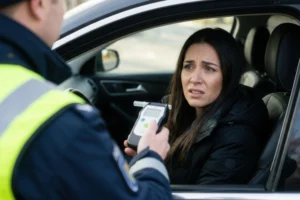
A drunk-driving arrest can raise an immediate and important question: What happens if the driver refuses to take a sobriety test? California’s implied consent law requires drivers who are lawfully arrested for DUI to submit to a chemical test of their blood or breath, with certain circumstances allowing a urine test. The timing of an officer’s request can therefore be critical.
Refusing a chemical test can create consequences separate from the underlying DUI charge. A refusal can lead to a driver’s license suspension or revocation through the California Department of Motor Vehicles (DMV), may result in additional penalties if the person is convicted of DUI, and can be presented to a jury as evidence suggesting consciousness of guilt.
At the same time, a chemical test refusal does not automatically establish that someone was driving under the influence. Prosecutors still must prove the elements of the DUI charge beyond a reasonable doubt. The circumstances surrounding the refusal, the reason for it, and the other evidence in the case can all matter.
If you are arrested for DUI in San Bernardino County, Rancho Cucamonga Attorney John D. Lueck can help you evaluate the circumstances of your arrest, along with testing, searches, and other aspects that could affect the outcome of your case. For example, understanding the difference between chemical testing and field sobriety testing, and the potential consequences of refusing either, is only one important distinction among many.
What Is California’s Implied Consent Law?
California’s implied consent law is found primarily in Vehicle Code § 23612. By driving a motor vehicle in California, a driver is generally deemed to have consented to chemical testing after a lawful DUI arrest.
The law distinguishes between the preliminary investigation officers conduct before an arrest and the chemical test required after an arrest. Once a person has been lawfully arrested for driving under the influence, the officer generally must advise the driver that refusing or failing to complete the required chemical test can result in consequences involving the driver’s license and additional penalties.
The important point is that a driver should not assume that refusing a chemical test is a way to avoid a DUI case. California law specifically addresses refusal and imposes consequences that can apply even when the chemical test itself does not produce a BAC result.
Chemical Tests vs. Field Sobriety Tests
The terms “chemical test” and “field test” are sometimes used interchangeably, but they refer to very different things.
A chemical test is used to determine the concentration of alcohol or, in appropriate circumstances, the presence of drugs in a person’s body. For an alcohol DUI, the test generally involves blood or breath, with urine testing available in circumstances specified by law.
A field sobriety test, by contrast, is a roadside assessment of physical or cognitive performance. Common standardized field sobriety tests include the horizontal gaze nystagmus test, walk-and-turn test, and one-leg-stand test. Field sobriety exercises do not directly measure BAC. Officers subjectively interpret a person’s performance and may use their observations as part of the basis for determining whether an arrest is appropriate.
Additionally, a roadside preliminary alcohol screening (PAS) device may be used during a DUI investigation to provide an indication of a person’s alcohol concentration, but it is not the same as the evidentiary chemical test administered after arrest.
Is Refusing a Chemical Test Legal?
California’s implied consent law requires a person who has been lawfully arrested for DUI to complete a chemical test if ordered by law enforcement. Refusing that test can therefore have legal consequences. The precise consequences depend on the circumstances, including the person’s prior DUI history and whether the person ultimately faces a DUI conviction.
California’s implied consent law provides for license suspension or revocation following a qualifying refusal. A first refusal can result in a one-year driver’s license suspension. Longer periods can apply to subsequent qualifying refusals, and additional consequences can apply to drivers with prior DUI-related convictions or suspensions.
These DMV consequences are separate from the criminal DUI case. This distinction is important because a person can face a driver’s license proceeding even though the criminal case has not yet been resolved.
A Refusal Can Be Used Against You
A chemical test refusal can become evidence in the criminal case. Under California law, evidence of a defendant’s refusal to submit to a chemical test may be admitted in a DUI prosecution under certain circumstances. Prosecutors may argue that the refusal demonstrates that the defendant knew they were intoxicated or believed the test would produce an incriminating result. That argument, however, is not necessarily the end of the issue. There can be many reasons someone might hesitate, fail to provide an adequate sample, or misunderstand what is being requested. A defense attorney can examine exactly what the officer said, what warnings were provided, whether the defendant understood them, and what the defendant’s actions prove or don’t prove, as well as whether the prosecution can establish that there was actually a refusal under the applicable law.
A refusal may provide something for the prosecution to use, but it does not relieve prosecutors of their burden to prove the DUI charge beyond a reasonable doubt.
One reason DUI cases involving chemical test refusals can become complicated is that a refusal means there is no numerical BAC result for prosecutors to present. A very high BAC test result can be powerful evidence in a DUI prosecution. Depending on the circumstances, a defense attorney may challenge the accuracy or reliability of that result, but there is no question that a numerical result substantially above California’s legal limit can create a significant evidentiary problem for the defense. A refusal does not provide that numerical evidence.
Consequently, the absence of a chemical test result may leave prosecutors with less direct evidence regarding the driver’s actual alcohol concentration. Nevertheless, California law imposes immediate and severe consequences for refusal on one’s driver’s license, and prosecutors can still use the refusal itself as evidence of driving under the influence. A person who has already been arrested should not assume that refusing a chemical test will result in a better outcome than taking it. The appropriate response depends on the circumstances, and the legal consequences can be substantial either way.
What About a Breath Test That Produces an Extremely High Result?
A chemical test showing an unusually high BAC does not necessarily mean the number is automatically accurate. A defense attorney can investigate how the test was administered and whether applicable requirements were followed. Depending on the type of test, issues can include the device’s maintenance and accuracy, the collection procedure, observation requirements, contamination concerns, and compliance with California’s regulations governing DUI chemical testing. Likewise, blood testing can also present questions concerning collection, storage, handling, laboratory analysis, and chain of custody. The existence of a chemical test result therefore does not eliminate the defense lawyer’s role. The prosecution still has to establish that its evidence is reliable and admissible.
Can a Chemical Test Refusal Be Challenged?
Yes. A defense attorney can examine the circumstances surrounding an alleged refusal. Questions may include whether the person had actually been arrested, whether the officer provided the required advisements, whether the driver understood the request, whether the person was physically capable of providing a sample, and whether the officer accurately documented what happened. There may also be situations involving medical conditions or other circumstances that affect a person’s ability to provide a breath or blood sample. These details can matter both to the criminal prosecution and to the separate DMV proceeding.
What Happens to Your Driver’s License?
A chemical test refusal can trigger DMV administrative action. The DMV’s process is separate from the criminal prosecution, meaning that winning the criminal case does not automatically resolve every license issue.
There are strict deadlines for challenging a DUI-related administrative license suspension. A person who wants to contest the suspension generally must act promptly after the arrest. This is one reason contacting a DUI defense attorney quickly can be important. An attorney can evaluate both the criminal case and the driver’s license consequences rather than focusing exclusively on what happens in criminal court.
How a Criminal Defense Attorney Can Help
A DUI case involves much more than a BAC number or the lack thereof. A defense attorney can examine the entire sequence of events, beginning with the traffic stop and continuing through the arrest and chemical testing.
Attorney John D. Lueck, a Rancho Cucamonga criminal defense lawyer representing people accused of DUI and other criminal offenses in San Bernardino County, can investigate whether police had a lawful basis for the stop, whether the arrest was supported by probable cause, and whether officers followed applicable procedures.
Depending on the facts, the defense may challenge field sobriety testing, chemical test evidence, the alleged refusal, or the legality of the traffic stop itself. Counsel can also evaluate whether a DMV license action should be challenged and negotiate with prosecutors when appropriate.
Most importantly, an attorney can place the refusal or any chemical test result in its proper evidentiary context. A refusal does not automatically prove impairment, just as a chemical test result is not necessarily immune from challenge.
Do Not Assume a DUI Refusal Determines Your Case
Refusing a required chemical test can have serious consequences in California, including an independent driver’s license suspension, additional consequences following a DUI conviction, and the possibility that prosecutors will use the refusal as evidence in court. But a refusal does not automatically establish guilt. Likewise, taking a chemical test does not mean the prosecution’s evidence cannot be challenged. Questions about testing procedures, accuracy, admissibility, and the circumstances of the traffic stop may remain important.
If you have been arrested for DUI in Rancho Cucamonga or elsewhere in San Bernardino County, contact Attorney John D. Lueck as soon as possible. An experienced criminal defense lawyer can review the circumstances of the arrest, explain the potential consequences of a chemical-test refusal, and develop a defense strategy focused on protecting your rights and your future.
