
Can You Legally Carry a Firearm in Your Car in California?

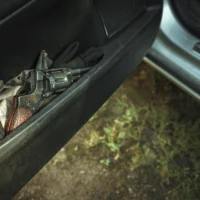
California has some of the strictest firearm laws in the nation, and many gun owners are surprised to learn that the rules for transporting a firearm in a vehicle are very different from those in many other states. A common misconception is that if you legally own a firearm, you can simply keep it in your glove compartment or center console while driving. In many cases, that is not true.
Whether you are traveling to a shooting range, going hunting, or simply transporting a firearm from one location to another, it is important to understand California’s gun transportation laws. Failing to comply with these requirements can result in misdemeanor or felony charges, depending on the circumstances.
If you have been charged with a firearm offense in San Bernardino County, Rancho Cucamonga criminal defense Attorney John D. Lueck can evaluate the facts of your case and determine whether law enforcement properly interpreted and enforced California law.
Can You Have a Firearm in Your Vehicle?
The answer is yes, but only if you comply with California’s firearm transportation laws. Generally speaking, a person who may lawfully possess a firearm may transport it in a vehicle if the firearm is transported in accordance with state law. The specific requirements depend on whether the firearm is a handgun or a long gun.
Rules for Transporting Handguns
California law generally requires that a handgun being transported in a vehicle be unloaded and secured inside a locked container or the vehicle’s locked trunk. These requirements are found primarily in California Penal Code §§ 25400 and 25610. A “locked container” means a secure container that is fully enclosed and locked with a padlock, key lock, combination lock, or similar locking device. Importantly, the glove compartment or center console does not qualify as a locked container, even if it locks. California law specifically excludes these compartments from the definition of a lawful locked container. For many lawful gun owners, this is one of the easiest ways to unintentionally violate California firearm laws.
What About Rifles and Shotguns?
California law generally does not require unloaded rifles and shotguns to be transported in a locked container under all circumstances. However, they generally must still be transported unloaded, and additional restrictions apply in certain locations or situations, including school zones, certain public buildings, state and federal facilities, and areas where local ordinances impose additional restrictions. Because firearm laws frequently change, owners should understand the specific rules that apply to the firearm they are transporting.
Can You Carry a Loaded Gun in Your Car?
In most situations, no. California generally prohibits carrying a loaded firearm in a public place or on a public street within an incorporated city or other prohibited area under California Penal Code § 25850. Even if the firearm is legally owned, having it loaded and readily accessible inside a vehicle may expose the driver to criminal charges. There are exceptions for certain individuals, including many peace officers and persons who possess a valid California license to carry a concealed weapon (CCW), but those exceptions are narrowly defined.
How Does a California CCW Permit Change the Rules?
Individuals with a valid California concealed carry license generally have broader authority to carry a loaded, concealed handgun in accordance with the terms and restrictions of their permit. However, even CCW holders remain subject to numerous state and federal restrictions. For example, carrying firearms may still be prohibited in certain government buildings, secured airport areas, and other restricted locations. Additionally, violating the conditions of a permit can still result in criminal charges or revocation of the license.
What Happens During a Traffic Stop?
Many drivers wonder whether they must immediately tell an officer they have a firearm in the vehicle. Unlike some states, California generally does not impose a blanket duty to volunteer that information during every traffic stop. However, drivers should always comply with lawful instructions from law enforcement officers and avoid making sudden movements toward areas where a firearm is stored. If an officer asks whether there are firearms in the vehicle, providing false information can create additional legal problems. Remaining calm and exercising your constitutional rights respectfully is often the best approach.
What Are the Penalties for Violating California Firearm Transportation Laws?
The consequences depend on the specific offense and the surrounding circumstances. Violations may be charged as misdemeanors or felonies depending on factors such as:
-
- Whether the firearm was loaded
- Whether it was concealed
- Whether the firearm was stolen
- Whether the individual is prohibited from possessing firearms
- Prior criminal convictions
- Whether another crime was allegedly committed
Potential penalties may include:
-
-
- County jail or state prison
- Significant fines
- Probation
- Loss of firearm rights
- A permanent criminal record
-
When firearms are involved in another alleged offense, prosecutors may also seek sentence enhancements that substantially increase potential punishment.
Common Defenses to Firearm Charges
Every firearm case depends on its specific facts. Just because police make an arrest does not mean the prosecution can prove guilt beyond a reasonable doubt.
Potential defenses may include:
Illegal Search or Seizure
Police must comply with the Fourth Amendment when searching a vehicle. If officers conducted an unlawful search, evidence of the firearm may be suppressed under California Penal Code § 1538.5.
Lack of Knowing Possession
Prosecutors generally must prove the defendant knowingly possessed the firearm. This issue often arises when firearms are found in shared vehicles or belong to another occupant.
The Firearm Was Lawfully Transported
Sometimes officers misunderstand California’s transportation laws or mistakenly conclude that a firearm was unlawfully possessed. Reviewing photographs, witness statements, and other evidence may demonstrate that the firearm was transported in compliance with state law.
Insufficient Evidence
As in every criminal case, the prosecution bears the burden of proving every element of the charged offense beyond a reasonable doubt. Weak evidence, conflicting testimony, or procedural errors may create reasonable doubt that supports dismissal or acquittal.
Why Hiring a Criminal Defense Attorney Matters
Firearm laws are among the most technical areas of California criminal law. Small factual differences—such as where a firearm was stored, whether it was loaded, or whether the driver had lawful access to it—can dramatically affect the charges and potential penalties. An experienced criminal defense attorney can:
- Determine whether police lawfully searched your vehicle
- Analyze whether prosecutors can prove possession
- Challenge sentence enhancements
- Negotiate reduced charges when appropriate
- Defend your rights at trial if necessary
Attorney John D. Lueck has extensive experience representing clients charged with firearm offenses and other crimes throughout San Bernardino County. He understands the complexities of California’s gun laws and works diligently to identify weaknesses in the prosecution’s case while protecting his clients’ constitutional rights.
Protect Your Rights After a Firearm Arrest
California’s firearm transportation laws can be confusing, even for responsible gun owners. A misunderstanding of the law or a mistake by law enforcement can result in serious criminal charges with lasting consequences.
If you have been arrested for unlawfully carrying or transporting a firearm in Rancho Cucamonga or elsewhere in San Bernardino County, contact Attorney John D. Lueck on his cell phone at 909-646-2736 as soon as possible. Early legal representation can make a significant difference in protecting your rights, challenging the evidence against you, and pursuing the best possible outcome.

